Think deeply and make stuff

When I started the DAV program in the Fall of 2019, I was faced with the ostensibly unfortunate reality during registration that there was not a single open course in my program. I ended up signing up for two DH courses and one GIS class at Hunter College. In the end, it was a semester marked by transformative thinking: about data (what is it? where does it come from? who makes it? should it actually be called capta?); about categorizations (is it possible to reconcile the inherent messiness of our world with the binaries required to communicate through digital means? who is left in and left out when we decide which structures compartmentalize the world? or, even more important, do we recognize categorization as a subjective, historically situated decision, not a reflection of “inherent truth”?); about visualizations (is there an inherent lie in representing 3D space on a 2D map? what about an inherent lie in representing data sets visually? or an inherent truth in legibility and access?). So many questions!

Since that semester, I’ve taken 6 classes in the DAV program. I’ve continued to think about, and be pushed on, these and other crucial questions about humanist data inquiry. But they’ve more often been from the DAV perspective — that is, the goal was generally to produce data analysis and data visualizations as the deliverables. The questions are important and absolutely considered in the process, but they are on some level incidental to classes that expect a final product of shareable insight via data, rather than, for example, a paper or a round table discussion as the fruits of knowledge production.

The return to the DH side this semester has made me realize how much more action-oriented I’ve become in the last year. I’m constantly thinking about how my work relates to the news, to my life, to the U.S. at large, to the jobs I’d like to have in one year, or five, or ten. Right now I’m both enjoying the opportunity to think deeply about data management plans and group dynamics, and rearing to get started on making stuff. In the last week or two, the rearing to go side has been shouting louder and louder.

I’m happy to have both sides. My background is largely in well-funded academic spaces, where talking about data and equity can happen without the urgency of needing to actually get a project done on a deadline. At worst, this has at times led me to feel like the work I do in private, academic spaces feels irrelevant to the work that’s needed in public spaces. The DAV program is, for me, a great antidote to that. I guess this is all to say, I’m not “move fast and break things,” I’m “think deeply and make stuff.” And I’m ready to make stuff!

Freedom of Speech: Outreach and Social Media Plan

Audience:

Immediate term: Once we have something complete like a website and the beginnings of a visualization we can reach out to law students at CUNY. Down the line we could get in touch with law students at other institutions, but the CUNY connection means they would be obliged to help us. Later on we can reach out to activists and propose to them sharing the infographic elements of our project. Librarians in DH or Law might be interested in our project as well so that they can share with their Institutions. Submitting an abstract to upcoming conferences in DH would also allow us to receive critical feedback on the project and dive into the technical aspects with professionals in the field.

A few of the key outcomes we hope to accomplish are: create connections with those in the field to to offer insight when reaching an audience outside of the DJ/Law circles. We ultimately want to bring awareness to our topic to those who might not be immediately interested in 1st Amendment discussions but would definitely find it interesting.

We will possibly include an acknowledgements section of the website to give credit to those we spoke to during the creation phase.


Social media strategy:

Given that we want our project to be publicly relevant and accessible, and that contemporary discussions of freedom of speech center the Internet and social media, it makes sense for our outreach to lean on social media platforms to build awareness of our site and engage our audience with some of the delight we’ve already had in researching this project.

We’ll use Twitter for its importance in scholarly and political discourse, and for its “public green” vibe. We’ll also use Instagram for its relevance as an activist platform.

Both Twitter and Instagram will push our social media content towards the digestible and visually-oriented, which dovetails with our overall goals of making abstract legal language accessible in a relevant, digestible format.

Our ideal tone is educational, sassy, and irreverent, as we’ll try to present a combination of lurid/ridiculous free speech designations, straightforward educational content about the First Amendment, and user interactive content to test our audience’s knowledge of the true meaning of Freedom of Speech.

Our formats will include memes, “carousel posts” i.e. 10-slide square format decks for sharing educational content on social media, and straightforward informational content, in addition to promoting the launch and existence of the Freedom of Speech* website.


Communication and Website:

Since our final product will end up being a website, there isn’t really a need for a second promotional website—before developing and adjusting the vast majority of the content that will go into our project, we will be able to promote the project with a foundation that includes a completed basic landing page, about page, and teaser, including a plugin to allow users to subscribe to updates about the project. Once the site itself is done, we can send out a blast email that lets people know the site is complete.

In order to reach a wider audience, we will write a short recap of our process and publish it to sites like Medium or hackernoon.

We’ll post the finished project link and publicize its CUNY launch in the Data Visualization Society Slack channel, as well as submit it to the NYC Data Jobs & Events newsletter and others TBD. We will also post about our project on groups in the GC Commons.


Search Engine Optimization:

As basic SEO goes, when building our site, we will first build a sitemap and submit it to Google,  and we will also include keywords in the header in order to have other search engines more easily identify what our website does. In addition to that, we will be following the Google SEO Starter Guide.


Week 7 Journal – Working with People

After 6 weeks of class, I realized that the hardest part of my project is not building an Omeka site, collecting oral histories, or writing metadata. It’s working with people.

As the Project Manager, most of my work consists of interacting with people: assigning tasks, checking in, gathering feedback, chairing meetings, and generally making sure everyone is okay. I am a “people person”, as I think I have written in my skillset post what feels like years ago. However, all this interaction is taking a lot of my energy. It might be the pandemic (it’s definitely the pandemic), but I feel exhausted from all this human interaction, especially since it’s 100% virtual.

I wish I could meet with my team in person, over coffee, and see how they feel from their body language and general vibe instead of guessing it from a thumbnail on Zoom. In this virtual environment, being true to our ethics of care is really challenging. I am trying to listen and to make everyone feel seen and understood, and generally to overcommunicate, but it’s hard.

Also, our project has another challenge in terms of human interactions: we are a community archive, and we want to hear from the people who run and use the fridges. This means bringing in people we don’t know yet and trying to figure out their personalities in the matter of an hour on Zoom. I knew this was going to be challenging, and I am trying to see it as a learning moment: not only will we become more comfortable with dealing with strangers on Zoom, but we’ll also apply our ethics of care to every aspect of the project.

NYC Community Fridge Archive – Outreach and Social Media Plan

General Goals

The Community Outreach Coordinator (Allison) will establish relationships with organizers and volunteers for NYC’s community fridges through social media and personal contacts. This plan is intended to communicate with as many community fridge organizers and members as possible to build a relationship with them, learn about their needs, and spread the word about the NYC Community Fridges Archive that we are building. With our approach of a “community’s needs first” to this archival project, our goal is to collaborate with the community fridges’ ecosystems as partners across NYC, which we hope will lead to the data collection of memories for our archive. 

Audiences

  • Grocers – The users/beneficiaries of the fridges
  • Fridge Organizers – The managers of the fridges
  • Volunteers – Folks who support the fridges 
  • Donors – Restaurants who donate food and other businesses (as well as individuals) who donate money/food
  • General Public: anyone who wants to learn more about NYC Community Fridges and get involved
  • CUNY DH Community: our classmates from the DH Praxis class and the whole community of the Digital Humanities program.

Our Values/Voice

The NYC Community Fridges Archive team operates under the values of kindness, respect, and transparency. We are sensitive to the needs of each community as they function independently and as a whole. We are fully committed to acting in solidarity with them and everyone who contributes to our archive will be fully acknowledged (if they choose to be identified). Our tone is compassionate and our intention is to be supportive of these generous and indispensable communities.

Website and Logo

The NYC Community Fridge Archive is in the process of creating its website homepage thanks to the Omeka Developer. This will be shared on our social media and in our outreach emails, so that community members can have access to some preliminary information they need. The homepage will contain our mission statement, social media, and email.

Once the Omeka Structure is in place, users will be able to access our collection of the fridge data and contribute to the archive with their memories in the form of text, photos, and documents (such as posters, flyers, et cetera).

The NYC Community Fridges Archive has a logo, which was created by our Research Lead Lola Shehu-Endo.

an image of a light blue fridge, open, with the "I love NY" logo on one side. The fridge is full of food and in front of it stands a big, red apple.

Social Media Strategies

The Community Outreach Coordinator will create accounts on social media (Instagram in particular at this time) and use these platforms to promote the project and build relationships with the community fridges across the NY metropolitan area. The Community Outreach Coordinator will also produce content, images, and design elements for our social media accounts and the Omeka site. The Social Media Manager will post 1-2 time(s) per week with dynamic content (photos, videos, et cetera.). Posts will include hashtags such as #nyccommunityfridges in hopes of increasing our visibility on social media and connecting us to profiles that are doing similar work.

All team members will have access to logins. We will share interactive opportunities on social media to engage with the community fridges and the archive in a mindful way.

Communication Strategies

We want to speak with as many community fridge team members as possible so that we can build a useful tool for them. We will be inviting community fridge organizers to our team’s regular Zoom meetings on a bi-weekly basis. 

  • The first point of contact will be a mention/repost on Instagram Stories in an attempt to gain more fridges’ attention. If they respond, we will invite them to our meeting. 
  • The second point of contact is through email with messaging that explains the overall project and invites them to our meetings. 
  • The third point of contact is to follow up via email, on social media, and in person.

Community Initiatives

The Community Outreach Coordinator will organize initiatives to mobilize local communities, amplify the visibility, and raise money for local fridges. Ideally, we will have one community initiative per month:

  • March: Photo contribution campaign
  • April: Yoga/Pilates lesson and fundraising
  • May: Launch party and Collaborators Appreciation Day.
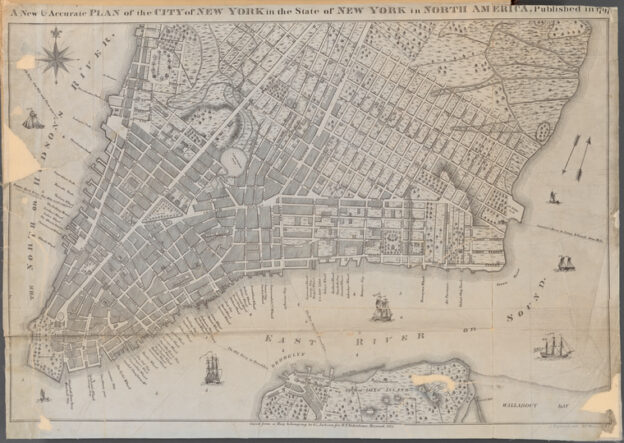
Map of Lower Manhattan from 1797

Mapping Cemeteries: Outreach and Publicity Plan

Our team is prioritizing pedagogy and the overall reproducibility of Mapping Cemeteries in our Outreach and Publicity Plan. While several social media platforms and web tools provide wide opportunities for distribution, not all–or even most–are conducive to teaching the Digital Humanities (DH) skills and topic of Mapping Cemeteries. 

We understand that our primary and secondary audiences value research, user design, user experience, and project design according to our analysis of their DH backgrounds and interests.  Based on this, we determined a six-week campaign across Instagram, Facebook, SoundCloud, and TikTok were the best options for the priorities of our audience and reproducibility of Mapping Cemeteries following our review of popular and obscure digital platforms and tools. Outlined below are key areas of outreach that include milestones and protocols to be executed during our intended window of interaction with our audience.

Staff Responsible

lane v., Outreach Lead

Asma N., Audiovisual Modulation Lead, Outreach Support

Platforms

  • Instagram 
  • Facebook
  • SoundCloud
  • TikTok  

Timeline

Our Outreach team will run a six-week campaign on the reproducibility and awareness of Mapping Cemeteries’ humanistic investigations. The timeline for outreach was designed around the time constraints of the Spring 2021 semester and the time required to execute phase 1 during this 13-15 week window. The six-week window is imagined as an opportunity for a specific and targeted approach to our outreach milestones. 

Protocol

  • Accessibility: The entire time will have access to all platforms, although Asma will be taking the lead on SoundCloud and Facebook content. Both login and passwords for the accounts will be stored in a team document.
  • Responses: Anyone on the team can respond to comments or converse in comment sections, but lane will take primary responsibility for ensuring comments are responded to within 24 hours of the comment being posted. If a comment pertains to a subject that another team member has specific knowledge or insight in, they may be requested to aid in the response.  
  • Troll Comments: With any social media presence, there is always a chance of being targeted by trolls or bots. If an inappropriate comment that has no relevance to the project is left under one of our posts, it will be flagged and removed by one of the team members.  
  • Tone: To best appeal to our intended audience of classmates and fellow academics, our social media presence will take a pedagogical approach with its posts. We do want to keep in mind the seriousness of our project’s subject matter, so the overall tone of our social media presence will be an intentional balance of educational and levitous.

Instagram and Facebook

For Instagram and Facebook we are focused on six weeks of posts starting on Week 7 of class (Spring Break):

  • At least one Instagram post with photos and relevant information on each cemetery our project is focusing on:  
    • a historical cemetery that still exists as such 
    • a cemetery that was established/other 
    • a cemetery that was repurposed as a public park 
    • a cemetery that was repurposed and later rediscovered and exists again as such 
    • a war memorial 
  • At least one post advertising each of the three episodes of our project’s podcast 
  • Other posts may include TikTok videos, excerpts from articles, or other relevant information intended to encourage interaction or draw the attention of our audience.

Audio Roundtable, SoundCloud  

Mapping Cemeteries will produce a limited, three-part audio series on phase 1 of the project hosted on SoundCloud. The first episode will introduce the team of DHers working on Mapping Cemeteries; episode two will introduce each of the five necropolitical investigations of Mapping Cemeteries; and the final episode will bring the team and listeners to an audio roundtable to disseminate Mapping Cemeteries and its overall intervention. 

Mapping Cemeteries is built with accessibility in mind; we understand access is a broad category that centers ability and learning styles alike, among other important considerations. We care about this scope, especially as it concerns the twofold pedagogical and reproduction priority of our project. We recognize audio as an opportunity to address an area of design; or to capture and playback the bits–for example a DH tip for troubleshooting–that interest our audience in another useful format for learning. We also recognize audio as an opportunity to reach our audience with known and unknown visual impairments–and varying accesses to supportive resources–through our project’s outreach. 

SoundCloud was selected as a primary hub for storing and manipulating audio data, and disseminating Mapping Cemeteries due to its reputation in audio hosting (storage), Rich Site Syndication (RSS) feed module, and playback features that do not require credentials (user registration) for our audience without an account.

Though this limited audio series will capture fragments of our project, it provides sentimental and intellectual insights to our process and relationship to our humanistic topic that would not be otherwise known, or pertinent to the key user-facing aspects of Mapping Cemeteries. 

TikTok 

The team is extremely interested in utilizing TikTok to attract the attention of our audience. Surprisingly, there is a significant amount of TikTok videos about digital humanities–most of them are in German. Before final dissemination, the goal is to post at least one to two videos discussing Mapping Cemeteries and the DH skills we’re using to build the project.  

Expected Outcomes

Our primary goal is twofold: we want to prioritize the reproduction and pedagogical elements of Mapping Cemeteries for our audience. Our expectation is that they will be able to implement at least one key DH skill outlined in our outreach content; and to reproduce an element of Mapping Cemeteries that concerns user experience and/or project design. 

For example, embedding audio is a DH skill that encompasses user experience and design and audiovisual modulation considerations. Our campaign could feature a three-part TikTok video series to teach this DH skill, informed by our Audiovisual Modulation, and User Experience and Design Leads, respectively, on how to accomplish (or to otherwise think about) this task.

  • The first video can introduce the skill, its importance, and how it can be used for a key task of our project (to reproduce).
  • Our Audiovisual Modulation Lead, Asma N., can develop instructions on how to record, edit, export, and upload an audio file to an audio source to generate an embedded code for the second video.
  • Our User Experience and Design Leads, Lisa K. and Nadia E. can show how to embed the code on the backend of a website, or platform, relevant to Mapping Cemeteries to conclude the series.

Our Outreach Team and Lead, lane v., will ultimately review the content (with project management input) and modify the pedagogy for each task in an accessible and creative manner for our audience.

If our audience can learn one of our DH skills, the hope is for them to then implement it–or conceptualize how–to reproduce an element of our project in one of the aforementioned topic areas (user experience, project design, etc.). Get the skill, use it for a task.

Measure of Effectiveness

Our Leads, Asma N. and lane v. will develop a survey to measure the execution of our expected outcomes. We want to know if and how our audience’s interests were reflected in our overall project and how our choices facilitated our goals for expected outcomes. 

Analytics

In addition to a survey, most of our intended platforms allow for analytics, or have DH tools that compensate. For instance, Mapping Cemeteries will need to establish an Instagram/Facebook business account to access its analytic feature, Instagram Insights. An alternative is Iconosquare, a free analytics tool designed to capture engagement data from Instagram and its parent company, Facebook. This digital tool, which can be discerned as one for DH in the case of Mapping Cemeteries, offers machine-learned, generated tips on how to improve our engagement. This tool generates analytics every 30 days, which means we’ll have access to two sets of analytic data within our 6-week window, should we use it.

*Map of Manhattan from 1797; image from the New York Public Library digital archives.

*posted by lane, Asma, Nadia, Lisa, and Bri

Personal Blog 3 – Data Management

As the research lead for our project, at this stage of the project I have also de facto become the data manager. Our data management class was very timely, as this past week I researched and collected our initial database of NYC fridges and began cleaning the data. It was useful to think about the process more structurally. Most helpfully it helped to consider file naming conventions as I was working on the different categories of information and think about questions like who will see the data, and how accessible it needs to be

Thinking about data management also underlined that collecting, cleaning the data, or naming conventions we need to consider our final product and what our chosen platform (Omeka) can do and what it needs from our database. It also inspired some research for additional resources on data management and I found this worksheet from Caltech Library that might be helpful to other groups in the class. In the next stages of data work, this process will be more collaborative with our wonderful developer lead (Senom), and I am very much looking forward to that stage of this process after thinking about all these questions together this week.

Data Management planning

In order to maintain complete alignment with the goals of a project, the administrative task of documenting where data comes from, how it is stored, and then made available for future use must be set down. This allows for universal assent regarding the methods for those involved, and allows third-parties to come and quickly gauge the results of a project based upon how accurately the data was wrangled and utilized.

For our project, because we are relying heavily on github there aren’t many hurdles to jump over. The question came up, however, of how we will be using the Case Book summaries from the publisher: InfoBase. There is pretty clear language on their website which doesn’t really point to being flexible.  “ “All rights reserved. No part of this book may be reproduced or utilized in any form or by any means, electronic or mechanical, including photocopying, recording, or by any information storage or retrieval systems, without permission in writing from the publisher.” 

It’s my belief that this kind of conservative sentiment is meant to deter any who seek commercial gain. Academic publishers are notoriously protective of their IP. I’m assuming that once I reach out to them about our use case that we will encounter no barriers in our academic purposes. We will be discussing this with Micki, however, who I believe has experience with historic documents and the kind of language best used for coming to an agreement with them. 

In the worst case scenario we will have to take the Cases and create our own descriptive language about them. This is not an impossibly difficult task to accomplish, but it would require a lot of extra time on our part. Our project is meant to be a straightforward scrapping of text with much of the work revolving around how to present on the webpage, if one or two of us needed to summarize the Cases in our own language it would put a hold on when we could start working on the webpage. Our case data is in the public domain, but the analysis from the Landmark cases textbook belongs to the publisher. It raises the question that perhaps we could retrieve summaries from another source? In this case we would need to reevaluate our metadata classification we have in place. Again, not an impossible task but we would need to restructure our data accordingly. 

Bio

Martin Glick is a Graduate Student at the CUNY Graduate Center pursuing an M.A. in Digital
Humanities. He has a B.A. in Philosophy from City College (CUNY), an M.A. in Philosophy at
Birkbeck College (University of London), and conducted independent research at the Chair for
Legal and Social Philosophy at the University of Göttingen from 2013-2017. He is currently a
Metadata Associate at Callisto Media, which is a data-driven publishing startup. Previously he
worked at John Wiley & Sons in the Editorial department. From Northeastern Pennsylvania, he
now lives in Brooklyn.

His favorite movie is Alien, and he wrote a chapter about it in a volume for the Blackwell Philosophy and Pop Culture series.

Project Update

I created a dashboard in Trello to act as a storehouse for Class Notes, Deadlines, and Meetings that people can share notes and links. Eventually a Gantt chart will be placed here as well.

To continue my post on “thought-in-progress” through screen sharing. Joanne and Eva were gracious enough to work through some of the data wrangling in Python before our very eyes. It was a unique experience that allowed us to peer into the mind of someone working through a problem. The benefit of working in a group project using skills we have honed over the last few years in school or at work is that we are still working through tools we have learned to use. In that sense there is still a testing out of what works best, and thankfully no one in the group is shy about presenting works in progress. In this sense we all get to learn what a JSON file is, how to successfully link up datasets in Github, and what a successful wireframe for a website looks like. 

We took to heart the presentation given by Dr. Lisa Rhody, when creating the collaborator’s agreement. It seems to me that sometimes the boundaries of responsibility can become a little muddled. Especially in cases where members of the group are enthusiastic about being involved in other parts of the project. It only speaks to the benevolence of the members of my group. We have settled on dividing up the work according to established strengths, but are considering recording parts of the workflow for the edification of the other members. Through these videos we are able to share knowledge, and introduce others to at least the fundamentals of programming or UX/UI design.

The advice to centralize the role of Outreach was well received by our group, and I was appointed as the person to spearhead these developments. There does seem to be some work necessary in one crucial aspect, highlighted by Joanne: Where is the boundary between simplifying and potentially losing nuance regarding the outcome of a case. – Does the process of aggregating this data lose nuance? Since not every case is the same (in many different ways, length, people involved, location) We want to avoid a flattening/distortion. To get to the heart of this we intend to meet with Micki who has also dealt with case law to some degree in hter Kissinger Project; and understand better the real-world ramifications of contending with historic and political documents.


FairCopy NYCDH Presentation review

One upside of the pandemic forcing communication between people to be conducted online has been that it fosters an environment of openness that heretofore was thought impossible. Lectures and conferences from Oxbridge schools are now made public to anyone with the Zoom link, research clusters like the Berkman Klein Center are focusing on international cooperation regardless of the time zone, and screen sharing through video conferencing tools allows an over-the-shoulder view of how to use software tools from global developers. This last point was well represented by the team at FairCopy, and inspired in my mind a suitable tool for a project that I had been kicking around in my head.


FairCopy is a transcription tool which pairs up images and text side by side to facilitate the transcription and commenting of scanned images. What I appreciated from the presentation which guided us through downloading a Library of Congress file and ingesting it into the program was the intuitive and the process of starting to get text into the editor was quite seamless.


Below is an image of the UI

I have been playing around with the software and hope to transcribe some Journals of the Cybernetics theorist W. Ross Ashby. His journals have had select summaries and keywords transcribed then linked in the webpage to enable the Search function, but a complete transcription has not been undertaken. 

Below is an image of the Journals online.

I want to take up the idea that screen-sharing has eased us into the ability to witness “thought -in-progress”. It struck me during this presentation during the QA session when the developers fielded questions and worked them out in real-time, that because we are in our respective homes, there is a comfort with working things out in front of others. A comfort that we maybe wouldn’t have if we were in a shared space away from our routine surroundings. The advantage is that the attendees get to bear witness to the kinds of thoughts and step by step working out of problems. We are invited into the mind of someone else. That’s what interests me so much about Journal entries. For me, these are snapshots frozen in time of this “thought-in-progress” that we are luckily privy to, due to our decentralized mode of communication. 


A person comfortable in their own home will allow the full unweaving of a process, when presented with an idea. Historically what has happened in the pages of a Journal, but now a screen-shared view of an expert working with software offers a similar insight.