Personal Blog #10: The End

Of course, it’s not the end! The semester is ending and we won’t have to blog anymore but the Reading Rebus project is being built to live on. All the rebuses that were left off of the final selection are absolutely worthy to be included even though they didn’t score high in our rating system. And now that I’m comfortable adding content to the website, it will become a much more relaxing activity, free from deadlines and presentations. Right now, I feel like a “rebus-adding machine” and I think I’m starting to see rebuses everywhere.

There’s also some outreach I’d like to do over the summer, when things have calmed down. I can finally send the project to my friends and colleagues to let them know why I’ve been missing these last few months, working on something in the “digital humanities” (which no one seems to understand in my circles). I will admit, we haven’t been the best at outreach but it’s because we want the project to be worthy of being seen. And I can say that I’m confident that the end result will be what I imagined and more.

I’ll also take this opportunity to thank my team members. As Bianca so eloquently said in the final group update, we are a hive-mind. This is also funny because you’ll see on the website how many rebuses contain bees, so many bees! Bianca has been driving the re-bus as PM, especially lately, reminding us of deadlines, commenting on files, copy-editing our work, and more. I can’t believe you have never PM’d before. High-five to Rachel for keeping us thinking about what rebuses are and expanding the project in all sorts of ambitious directions. There is no better person to represent the group in the presentation. Ostap’s knowledge and experiences with archives was invaluable. Although we weren’t able to properly use special collections, I’ve learned so much from your contributions. What Matt has done with heraldry is truly inspiring, I think you are now a specialist in this area. I aspire to be this focused on my next research project. But, it’s not the end! I only wanted to express my gratitude on this blog so that it’s saved for posterity! More soon…
Last Group ReadingRebus Project Report: thyme to go

Thursday’s meeting was our most candid and productive yet.  By Sunday, we seemed to have grown fully into our roles and responsibilities and delivered what we need for the presentation.  We still have fantastical dreams for the site, but voting collectively using the 0-3 rating system made our core-rebus-artifact group and their relevant categories for tags and metadata emerge clearly.  We took many of the class responses to heart and decided to embrace the visual delights of the project enthusiastically.

At the same time, getting the essay drafts was like a birthday party for me: I hadn’t realized my co-workers had been thinking such interesting thoughts throughout the semester.  Of course, I’d caught glimpses: however, the different minds, personalities, and sources of pleasure that we each bring to the project can best be seen in those individual explorations and explanations.

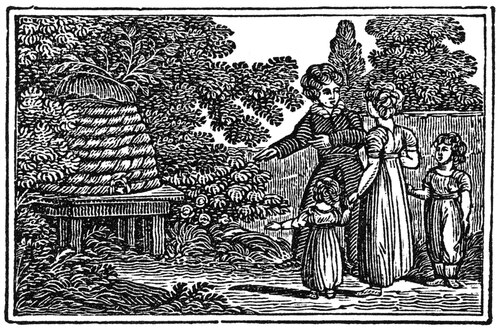
Hence, the project embodies what the early moderns called a “Raccolta” or a “gathering”: a synonym for the English “anthology” but one that resembles a harvest rather than a single-minded collection.  Or, to borrow a Renaissance trope used by Montaigne (and StarTrek, Seneca, et al), our results are the workings of a sort of hive-mind: individually “[t]he bees plunder the flowers here and there, but afterward they make of them honey, which is all theirs; it is no longer thyme or marjoram” [“On the Education of Children”].

In sum, I need not have worried about scarcity or drones; we have 30 + rebuses that received a top ranking from all members.  If we eventually add the ones that got a single good (2), not great (3), among the highest marks, we will have 80+.  All this inspires us to keep feeding  the project collaboratively over the summer, from our various fields: seeing if we can attract more social media attention now that Twitter has allowed us to post again, and developing more sub-themes and ludic experiences for our audiences—and ourselves.

https://collation.folger.edu/wp-content/uploads/2014/04/AlvearieTitlePage.jpg

Final Group Project Update: Corona Chronicles

The end of the semester always brings lots of competing work and priorities to juggle. I think we’re all looking forward to a much deserved break (a short one for those of us taking a summer course), but we’re also sad to come to the end of the road for this precious project we’ve been building for months now. Our expectations for the number of submissions we actually received and the features we were able to create on the site were all blown away. It’s especially amazing considering none of us ever met up in person to collaborate.

For our last group update, I encouraged the team to submit their current thoughts on where we are:

Phil: “Now that our MVP (minimum viable product) has been delivered and our project has more or less reached GETGO (good enough to go), we are attempting to leverage our technology platform to make further enhancements.  This effort, which includes changes to the user experience of the website as well as to the underlying contribution processing workflow, is testing the limits of our initial technologies.  Encountering these issues puts us in a good place for identifying the objectives of the project’s next iteration.”

GETGO really stands out here as a theme for us. We had so many ambitious plans that changed over time, specifically our scope of student outreach. But it was all for the best as we were able to maintain control, instill care for these students, and not feel overwhelmed with our workload. It’s hard to punt features to the next phase, but we’ve come to a good point where we’re happy with what we’ve put together and feel confident about sharing it out in its current state.

Karyn: “Seeing all that has been expressed in the student work submitted to this point has reaffirmed the original motivation for this project while also sobering me to the reality of what we may see in the work moving forward. Care – in different forms – should be infused in every aspect of the project. As such, questions of scale remain in play for the future, but we are well-situated to see the project into its next stages as a direct result of the individual and collective contributions from our team. As a group, we have built something better than what any one of us could have and that brings a great deal of meaning in and of itself.”

So well put. In the theme of care for these students, we can’t just be good enough. We learned how important it is to have this be top of mind in everything we do. While we were focusing on putting together the end product, these students are generously taking time out of their pandemic-affected lives to create expressive works for us. It’s an experience of digging up memories that some might’ve found stressful and traumatic. During outreach, we found ourselves questioning in group syncs, “Are we asking too much from them? How do we navigate this with utmost respect?” Thankfully we stumbled across these important questions and worked to create solutions. It’s not only made Corona Chronicles better, but it’s also made us better as digital humanists.

NYC Community Fridge Archive – Group Project Update

Last week we received a large number of submissions to the archive, which made managing contributions the focus of much of our work and future planning.

Outreach
Our outreach strategies seem to be working because a total of 5 different fridges have sent us materials officially through our platform. We have come up with a method to help spread the work of submissions go around if they happen to come via Email or Instagram. To sum it up, the ‘one-at-a-time’ file submission may be a barrier in collecting submissions, so we’ve decided to include in our confirmation email (that’s triggered by Omeka) a welcoming note to directly email us their photos if they should have 3+ documents to submit. This is not done yet, but we will be working on this toward next week.
On Instagram, Allison curated the Community Fridge Art Show and it’s happening right now! The art images (along with the info of contributing artists) look aesthetically pleasing and cheerful, so we really appreciate Allison’s meticulous work on this show. Plus, Allison is trying to figure out how to include the direction to our Omeka site in the show. 

Omeka
Montage fixed file upload issues, created and uploaded a banner. She also checked, approved, and edited contributions. For OHMS integration, she installed Hide Elements, OHMS Import, and OHMS Object Plugins; installed OHMS Viewer (been fixing a few issues upon communication with technical staff at Reclaim); she installed and edited a new Theme (Philly) as required by OHMS.

Other discussion from the meetings (about the final papers and the press release)
We realized that we need to ask Prof. Maney about what he wants to see in our final report (due Thursday, May 20th). Once we learn Prof. Maney’s guidelines for that paper, each member will give Andy what each wants/needs to include in the report. After that, Andy will put together those contributions and edit the text for the group’s final paper. (But we agreed that we need to wait for Prof. Maney’s specific instructions.) PS. In class, Prof. Maney promised to give us the prompt next week.
As for the individual paper, we reminded ourselves that the personal paper is separate from the team’s final report since that’s more of an individual reflection on their contribution to the project in connection to their academic and/or professional interest. 

 Press Release 
Andy has been composing the press release for the archive. The press release will be brief (around 500 words) but it aims to capture our philosophy and practice together succinctly in consideration of the general audience. However, Andy will try to avoid highlighting selected members of our team in the text. Instead, Andy will try to address our efforts rather in collective terms. The press release will be ready by our rehearsal day (May 6th). Next week, we will discuss where and how we will be using this.

Personal Blog: Inspiration

As we head into the final weeks of class and as our presentation approaches, I can’t help but look back and see how far we’ve come. The Covid19 Student archive, Corona Chronicles, started with a global and inclusive point of view. As week after week we face challenges from obtaining content to thinking about incentives for contributors to doubting the project’s global reach and sustainability, it’s great to our site and social media take shape and tell a story not just about the learners and their experience, but our team’s experience as well.

This project inspired a digital pedagogy project focusing on co-creation and our experience working and learning from our young teammates. With this in mind, and taking in from past DH courses, including Digital Pedagogy I and now Digital Pedagogy II, it is as if it’s all coming to a full circle. My final project for digital pedagogy II will be a quick guide to co-creation in open education. The project will reference this experience along with testimony from one of my teammates as we explore our roles as guides, educators, and co-producers, allowing for the audience, in this case, middle and high school students, to have a clear and prominent voice in a project that’s about them and for them.

Mapping Cemeteries: To the End of the Semester and Beyond

Echoing the sentiment in others posts–how is tomorrow May? Part of me still feels like it’s February and we’re still in the early planning days. But when I try to list everything we’ve accomplished, wow, we’ve really come so far as a team.

Mapping Cemeteries: After Life

We’ve now all completed recording our individual components for our second audio episode, in which we all spend time musing about our individual locations. And for the second half of class yesterday we recorded most of our third episode, in which we shared more of our individual research and drew connections between our locations. And it was such a wonderful experience. This is something we had put off for the most part; we were drawing a few connections here and there in previous meetings, but until last night, I don’t think we quite knew just how many connections there were to draw (I am primarily speaking for myself, but I don’t think I’m alone on the team in this sentiment) between our individual research efforts.

Added bonus: much of what we discussed will also inform the vertical timeline aspect of our project. Aside from completing our content for the location pages, the vertical timeline is probably the biggest deliverable we have yet to complete. And we’ve agreed to complete it together in our next team meeting. And it’s not even a bonus per se; that makes it sound like happenstance, when in reality Asma has put in so much work to create our audio plan, and pick themes for each of our episodes, and write prompts for us, and generally be our amazing audio guide. I think several of us were nervous, never having worked on content like this before (I know at least I was), but Asma has made the process so enjoyable and rewarding.

And she’s been hard at work editing our first episode, which she expects will be ready on SoundCloud this Sunday. I will update the post, or share in a reply, when our episode is ready.

Final Inventory

As I mentioned in my personal blog, we’ve completed an inventory of our final must-haves before the Digital Showcase for our GitHub site, and a similar inventory is in the works for our Commons site.

We’ve worked backward from the showcase, knowing we want to add in screenshots and/or video of our GitHub site for our revised presentation, and set two more data deadlines so Nadia only has to pull our data to update our content twice more.

Our plan for these last two weeks is admittedly demanding, but I think we can do it. And we still have at least two more meetings before the Digital Showcase where we can readjust and scale back as needed.

Personal Blog: Slight design changes, big improvement!!

This week and last our group worked independently for the most part on our own tasks. As the designer, then, I was fixing up some minor pieces of our UI. I was also getting great feedback from my teammates on ways we could make the Ui more pleasant and fun, and so I incorporated those ideas. Because of these changes, the UI is looking better than ever! Really excited to see how things shape up when the final product comes out.

Something that was new for me was the design to development handoff process WITHOUT the backing of a large and complex technical (and design systems) infrastructure. I work for a mid-to-large sized tech company, and so the handoff is usually quite simple: I create designs in Figma, scope out design specs, and give it to the engineers. However, given this project has just two developers, it was a learning experience to think about how things had to be handed off when there aren’t pre-developed components that the developer can easily plop into their code. As such, I’m really thankful to Joanne and Eva for working through the nits and finding ways to make everything work. Overall: very excited for what’s to come!!

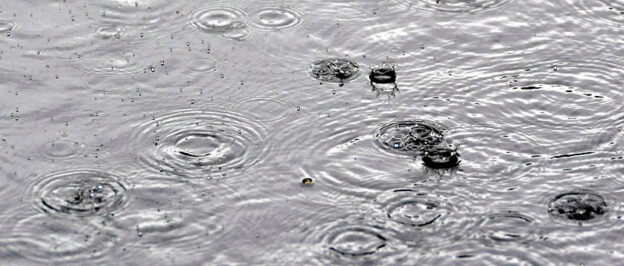
Rain on asphalt

Lisa’s Public Journal – Week Thirteen — Talking in the Rain

Cross section drawing of a carbon button microphone|, 1916.

Cross section drawing of a carbon button microphone|, 1916.

This week, in addition to work on the website, we had a new deliverable:  an audio diary to be made at our cemetery location.  Asma, our lead, gave clear direction:

“Record 15 minutes – 30 minutes of audio that capture sounds unique to your environment (the place of recording). Introduce your cemetery and later, the necropolitics that contextualize it. Conclude with remarks about your selection of data points that appear on MC’s Timeline and why it is important to you.”

At our weekly team meeting, I had pushed back.  I was concerned that 15-to-30 minutes was too big an ask (both for us as makers and for our nascent audience of listeners), plus I was not sure that I could actually produce that much content!  My team was, as they always are, supportive.  “Do what you can.”

I went back to my working Word document …now some 100 pages of research and false starts …and read through it.  Whenever I hit some copy that felt like it needed to be said, I highlighted it.  When I got to the end, I had about twenty pages of content that began to read like a conversation.  And that’s when it happened …that wonderful thing that sometimes does happen when you have been working and reworking text …the rewrite began to write itself.

It took about six hours to complete the script.  [It was slowed by my also using that time to adjust the copy for my cemetery’s webpage.]  I did a slow read, then edited it down.  I did a second read, this time recording it, and listened back.  More edits.  I did a third read and now, listening back, it felt right!

All that Friday, I’d had the radio on in the background.  At the top of the hour, the weather report changed every so slightly from “there will be rain”, to “there is a slight change of rain”, to “we are looking at clear skies tonight”.  I emailed myself a copy of the script, paired my smartphone to an open-ear bluetooth headset, and headed out the door.  The sun was shining as I walked up Broadway toward the Worth Monument.

Standing before the monolith, I was grateful for its relative isolation from any comforts (no benches where people might loiter and heavy traffic on its east and west sides).  To record, I had to remove my mask.  This was the first time in more than a year that I had gone, barefaced, in open air.  It occurred to me that this was a public park and technically, masks were still required.  I glanced around and the street-scape was devoid of NYPD; hopefully, this creative exercise would not end with a citation.

The first take was a challenge.  When I listened back, it was forced and bit too breathless.  The second take when well.  And, toward the end the third take, those promised clear skies opened with a downpour for rain.  Having not brought an umbrella, I ran across Broadway to crouch under the large overhang of an office building.  Getting the mask back on was a process, given the now fogged glasses and non-intuitive headset.  The tall man sheltering with me nodded as I gave my apologies.  “I was watching you …were you having an argument with someone”?  I laughed.  “No, not all.  I was recording something for school.”

Our conversation continued.  I told him about the project.  Played him back a bit of the recording.  He worked in the neighborhood and, like me, had barely noticed the monument.  While the rain lasted, we chatted about our Covid experience and the importance of parks.  It was one of those lovely New York moments when you connect with a stranger.  Once the rain cleared, he headed uptown and returned to the monument to complete the final take.

P.S.  Our podcast network is being streamed on SoundCloud.  Here’s the link: https://soundcloud.com/mappingcemeteries.

Raindrops on asphalt

“File:Rain (3735431928).jpg.” Wikimedia Commons, the free media repository. 21 Sep 2020, 16:46 UTC. 13 May 2021, 22:15 <https://commons.wikimedia.org/w/index.php?title=File:Rain_(3735431928).jpg&oldid=467011541>.

Due date:  29 April 2021 (published in final form on 18 May 2021).

Personal Blog #9: Mental State

Reiterating Rachel’s post, I was about to sit and start some “rebus writing” but I remembered this blog post was due so that gives you a good indication of where my mind is at these days. How is next week May? Did Jan, Feb, March and April actually happen? In this mad rush of the end of the semester (both this class and my job) I’m very anxious to finish the rebus project although we still have a long way to go. Rebuses are rated so we can finish the metadata templates and begin adding them to the website. This will be fun but also a bit time-consuming. At that point the website will start looking like something that’s ready for public consumption. I’m actually a bit envious of the other projects (Community Fridges and Corona Chronicles) that already have an engaged community that is contributing. Related to outreach, Twitter suspended our account because #twitterhatesrebuses for some reason. Anyway, we’re back up now (I think – I’m afraid to login) but I find it so funny that of all the evil things occurring on twitter, they somehow thought our three tweets were cause for concern.

I was reflecting this week on how my team has been working and whether we’ve spent enough time “doing the work” vs. “talking about doing the work” – in other words, why does it seem like everything needs to happen in these last two weeks? I kept going back and forth and finally decided we did both equally. It might seem like we didn’t “do” enough work but we wouldn’t have been able to “do” any work without all of our conversations about the work.

Lastly, I’m excited to read my team’s rebus writings. Onward!

Personal Blog: Rebus Writing

This upcoming week I am focusing on two things: the rebus map data, and one of my essays – I have gotten much further on my “why rebus/why puzzle” essay (enough to cut a large swath) than I have gotten on my “what’s up with satire and the rebus form” essay. I am sad-ish to not have time to write about rebus semiotics, rebus poetics, and rebus unmasking the hidden gaps in language and cultures; these are all interesting places that the research pointed to and if I had a do-over magic wand, I would write about them all.

An interesting merging of interests: I’m a Wikipedia editor and advocate in general for open community-based knowledge building. The amount of research we were thwarted from trying to do in the beginning was disheartening at first and maybe had us spinning in circles, but I wish I had just had the guts to say “we should try to look up all the available open access images” about two months earlier. I don’t think I realized how many of the Wikimedia Commons entries are coming directly from museum collections’ open access servers, making the commons (and Wikidata) a very cool linked data bibliography of web images for our purposes. We also found numerous other sources from all of the institutions that made their collections public this year, including some full out of print, non-digitized books through open access collections, like this gem of a book called “Symbol and Satire during the French Revolution” – my Napoleon-baiting has never been stronger or wittier. Also of note for other visual researchers: last week I learned I could search all creative commons licensed images directly from CC’s own search feature which would have been great to have 3 months ago as well! Good thing to note when it’s hard to get to the archives (or just for the future of linked infinite open knowledge resources as promised at the dawn of the internet; either way).

Nevertheless, writing even web-sized essays at the end of the semester during (let’s say it again for the folks in the back) a pandemic, social upheaval, injustices and straight up hate crimes, and more recently calls to “get back to normal” (sure, Jan)  — well it is a lot. As always I am grateful for the aid and collaborative impact from my teammates and excited about all the rebuses we have in our collection.